.png?width=322&height=138&name=Revenant+long+logo+(white).png)
Low Back7 min read · Dr. Nevin Saju, PT, DPT
The short answer
Usually keep moving, just not at the same dose. Research consistently shows staying active beats bed rest for acute back pain, and most lifting tweaks are not serious. Lower the weight, shorten the range, and rebuild your hinge gradually. If symptoms settle within a day or two, you're on track.
“I heard a pop deadlifting. Now hinging hurts.”
I hear some version of that a lot. Sometimes it's a heavy pull. Sometimes it's nothing dramatic at all. One lifter told me his back locked up while he was just touching his toes. Others tell me it hurts to sneeze or put their socks on.
And then the advice starts rolling in. One person says never deadlift again. Another says push through it. Meanwhile you're lying on the floor wondering if you just did real damage and how much progress you're about to lose.
Let's slow it down. Most of the time, this is far less scary than it feels.
Should I rest or keep lifting after hurting my back?
Keep moving, but change the dose. Research and clinical guidelines agree here: staying active leads to better recovery than bed rest for acute low back pain, even if some pain is still present.
Bed rest feels like the safe choice. It isn't. Studies comparing shorter and longer periods of bed rest found no benefit to staying down longer, and guidelines specifically tell clinicians not to recommend it. Staying active keeps blood flowing to the area, keeps you conditioned, and stops fear from quietly taking over how you move.
Some perspective helps too. Research shows about 80% of Americans deal with low back pain at some point. In primary care, fewer than 1% of acute back pain cases turn out to be something serious. The vast majority are mechanical and have a favorable outlook.
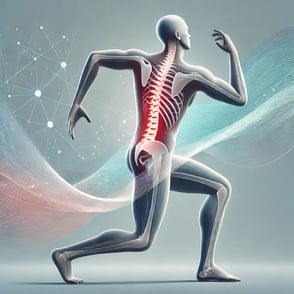
So why does it feel so dramatic? That locked up, flat, stiff back is usually your body protecting itself. When your nervous system senses a threat, it tightens the muscles around your spine like a splint. Short term, that's smart. The problem is when the protection outlasts the threat. Research shows that constant guarding and bracing can actually keep pain going, because all that extra tension adds compression to the spine. Your back stays rigid, movement feels scary, and the cycle feeds itself.
That's why I describe pain as an alarm system, not a damage report. After a tweak, the alarm is turned up. What you feel when you bend over is often a buzz, not a sign you're breaking something. Hurt doesn't automatically mean harm.
Fear matters more than most people realize. Research shows high fear of movement and catastrophizing are strong predictors of back pain becoming long term. Reassurance and understanding what's actually happening are part of the treatment, not a nice extra.
None of this means pushing through. It means don't take the bar away. Change the dose. Lighter weight, shorter range, slower tempo, or a different exercise for a while. If you lift regularly, that's how we approach physical therapy for lifters: keep you training while the back calms down.
Your back isn't broken. It just can't handle what you're asking of it yet.
Don't take the bar away. Change the dose.
I heard a pop. Do I need an MRI, and is lifting with a rounded back dangerous?
A pop on its own doesn't tell you much, most acute back pain doesn't need an MRI, and a rounded back isn't automatically dangerous. What matters more is how you're doing now and how much load your back is handling.
The pop
There isn't good research on what that pop actually is. What's more useful is what's happening now: whether you have any of the red flags below, and whether things are trending better over the next few days. Pain that's intense but improving is a very different situation from symptoms that are spreading or getting worse.
The MRI
Guidelines don't recommend routine imaging for acute low back pain unless there are red flags or worsening nerve symptoms. Imaging in these cases doesn't improve outcomes, and it can make people feel worse about their backs. One reason is that MRIs find a lot of things in people with no pain at all:
- In one large review of people without back pain, disc bulges showed up in about 30% of 20 year olds, 40% of 30 year olds, and 50% of 40 year olds.
- In one study of young athletes with no back pain, 96% of those under 22 had something that looked “abnormal” on MRI.
Doctors order imaging for good reasons when red flags are present. Without them, a scan often adds worry without changing the plan.
The rounded back
Everyone's lower back bends some during a lift, even when they're told to keep it flat. Trying to prevent all spinal bending is unrealistic and unnecessary for most submaximal lifting. Your spine is strong and handles a lot of load.
Position does matter at the extremes, especially with heavy, repeated loading near full bend. In one lab study on spinal segments (not people lifting), repeated loading at 45 degrees of forward bend failed after about 263 cycles, compared to about 8,253 when upright. That's not a reason to fear bending. It's a reason to respect dose. Rigid rules like “never round your back” or “always brace everything” tend to create fearful, guarded lifters without actually preventing pain.
Back still locking up every time you hinge?
What should I do this week after tweaking my back?
Move every day, find what feels okay, and rebuild your hinge in stages.
1
Keep moving daily.
Walk, do normal daily tasks, and avoid long stretches lying down. Some discomfort is fine.
2
Find what feels okay right now.
Simple options like sit to stand from a chair, slow relaxed breathing through the rib cage, and bending with your knees pushed forward to share load with your legs often feel better. Cues like hinging from the hips or lightly bracing can calm pain in the short term. Just don't live there.
3
Rebuild the hinge in stages.
Start with what you can do comfortably, like sit to stands or a box squat. Move to a partial range hinge with hands on your thighs, then a light kettlebell pull from a raised surface, then full range, and eventually back to the bar. Adjust weight, range, tempo, or the exercise itself instead of skipping training.
4
Use the traffic light rule.
If symptoms settle within a day or two, you're in the green and can keep progressing. If they hang around 3 to 4 days, scale your volume down. Don't stop completely.
5
Rebuild trust, not just strength.
Fear is often a lack of exposure. The more your back successfully handles graded load, the less your nervous system feels the need to guard. If it's not settling or keeps coming back, low back pain physical therapy can map out that progression with you, and you can read what other lifters have said about getting back under the bar.
When to see a doctor first
Get evaluated by a physician right away if you have:
- Numbness in the groin, inner thighs, or buttocks
- Trouble urinating, or loss of bladder or bowel control
- Leg weakness that's getting worse, like your foot dragging or slapping when you walk
- Numbness or weakness spreading through your legs
- A history of cancer, or unexplained weight loss
- Fever, chills, a recent infection, or a history of IV drug use
- Constant pain that doesn't change with position, or pain that wakes you at night
- Back pain after a major fall, accident, or significant trauma
Common questions
How long does a lifting back strain take to heal?
There isn't one fixed timeline, but research shows acute back pain has a favorable outlook, with the biggest improvements usually happening early. In one study following people with acute back pain for a year, 76% were either pain free or living with low pain and low disability. If yours isn't trending better, get it assessed.
Why does my back keep going out?
A previous episode of back pain is the strongest predictor of the next one, so this pattern is common. The good news is that it's changeable. In one study, a targeted exercise program cut the one year recurrence rate to 30%, compared to 84% with advice and medication. If you've done rehab before and it didn't hold, I wrote about what to do when physical therapy didn’t work.
Will I have to stop deadlifting?
Almost never permanently. Guidelines support staying active, and graded loading is how you rebuild tolerance. The goal is getting you back to the bar with a smarter progression, not taking it away.
Is it normal that sneezing or putting on socks hurts?
Yes, that's common after a tweak. Your back's protective system is turned up, so everyday movements can feel sharp for a while. As things calm down and you keep moving, those usually ease.
Keep reading
Revenant Physical Therapy
Still not settling, or keeps coming back?
Book a free 15 minute discovery call. We'll talk through what happened, how your back is responding, and whether Revenant is the right fit to get you lifting with confidence again. Revenant Physical Therapy is based in Farmers Branch and works with lifters from Addison, Carrollton, and across North Dallas.

Written by
Dr. Nevin Saju, PT, DPT
Founder of Revenant Physical Therapy in Farmers Branch. Three open-heart surgeries taught him what it takes to trust your body again. Now he helps runners, lifters and active adults do the same. More about Nevin →

.png?width=170&name=Revenant+long+logo+(white).png)
Comments